






Key Takeaways
- Modern boat rentals range from hourly electric boats and pontoons to full-day yacht charters and multi-day houseboats, with options for every budget and occasion.
- Renters can choose captained trips or drive-it-yourself options through flexible daily boat rentals and boat club memberships.
- Always compare prices, safety standards, and boat types before booking—clarify if the quoted rental rate includes fuel, cleaning fees, and taxes to avoid hidden charges.
- Summer is peak boating season, making early planning and booking essential, especially for holiday weekends and sunset time slots.
- This guide walks you through concrete steps and timelines to book a boat for specific occasions, from summer 2026 vacations to last-minute weekend getaways.
Introduction to Boat Rentals
A boat rental service provides short-term access to vessels for leisure, fishing, or special events without the burdens of ownership. Since around 2020, the industry has experienced explosive growth—driven by pandemic-era shifts toward staycations, small-group outdoor activities, and flexible experiential travel. Global market valuations now exceed USD 24 billion, with North America commanding nearly 39% of the market share thanks to dense marina infrastructure and high disposable incomes in coastal states like Florida and California.
Understanding your options matters before you search for the right vessel. Traditional boat rentals involve marinas or operators providing insured, maintained fleets with optional captains. Peer-to-peer sharing platforms connect private boat owners to renters via apps with built-in insurance and secure payments, offering variety but some variability in vessel condition. A boat club represents a membership model with fixed annual fees granting unlimited or reservation-based access to shared fleets—ideal for frequent local boaters who want to skip storage and maintenance hassles.
The use cases are endless: birthday cruises, July 4th fireworks on a lake, corporate outings planned for summer 2026, sunset electric boat trips in urban harbors, and weekend yacht charters along the coast. Customer experiences with boat rentals can vary significantly, with common complaints including inconsistent boat quality and missing equipment, so knowing what to expect helps you choose wisely.
This article covers the main boat types—pontoons, fishing boats, electric boats, sailboats, and motor yachts—and walks you through:
- How to choose the right boat for your group and occasion
- The step-by-step booking process from search to return
- Safety essentials, licensing, and insurance considerations
Types of Boat Rentals Available
Most marinas now offer a mix of daily boat rentals, hourly options, and multi-day packages across several boat categories. There are various types of boats available for rent, including powerboats, sailboats, houseboats, and pontoons, each suited for different activities and experiences. Understanding what’s available helps you pick the perfect vessel for your trip.
Pontoons
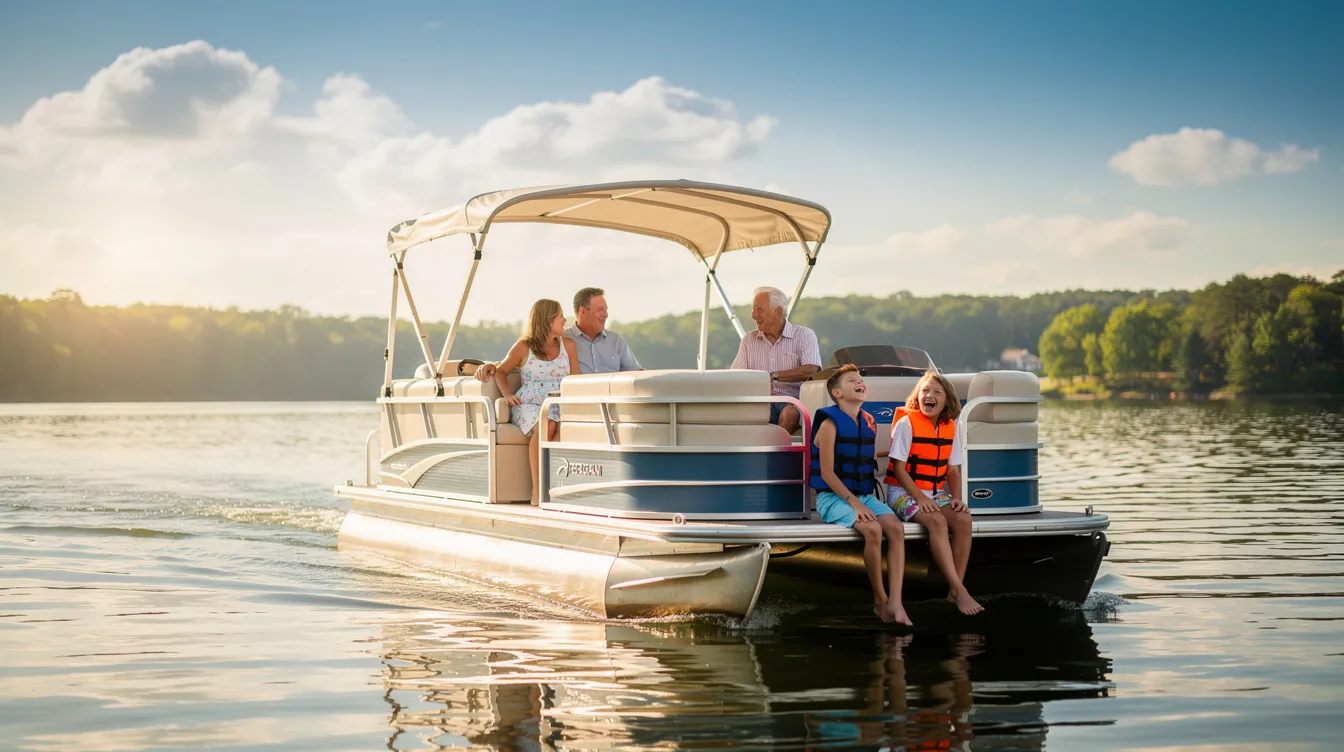
Pontoons are the quintessential social “party” boats, offering comfort, stability, and ample space for groups. Typically 18–26 feet long and accommodating 6–12 people, they’re perfect for family sandbar trips, calm lake outings, and leisurely cruises. Stable decks and shaded canopies make them ideal for passengers of all ages, including kids. Pricing often starts at $200–400 per hour or $600–1,200 per day in popular destinations like the Great Lakes.
Small Motorboats and Fishing Boats
Small motorboats (16–24 feet) work well for solo or duo outings, priced around $150–300 per hour. Fishing boats emphasize features like rod holders and livewells, making them perfect for anglers targeting early-morning bites, and some operators even offer a dedicated guided fishing experience add-on with local captains and gear. Half-day fishing boat variants typically run $300–600, while full-day options extend to $600–1,000 depending on location.
Electric Boats
Electric boats offer a quiet, eco-friendly experience often used on urban rivers and no-wake lakes. With ranges of 20–40 nautical miles and 2–4 hour rental norms, they’re ideal for peaceful cruises and sustainability-focused renters. Expect pricing around $100–250 per hour.
Sailboats and Catamarans
For wind-powered adventure, sailboats and catamarans provide a classic sailing experience. Many renters in 2025–2026 opt for a captain unless they already hold sailing certifications. Daily rates range from $300–800 for leisurely coastal hops.
Luxury Yacht Charters
Yacht charters (40–80 feet) represent premium experiences with professional crew, gourmet catering, and water toys. Common use cases include milestone birthdays, small weddings, and VIP corporate events, especially when you choose from top-rated yachts for luxury charters with high-end amenities. Pricing ranges from $2,000–10,000+ per day depending on size, amenities, and destination.
Houseboats
Houseboats serve as multi-day “floating cabins” popular on large reservoirs and calm waterways like Lake Powell. Sleeping 6–20 guests with kitchens and generators, they enable self-paced itineraries over 3–7 night periods at $1,500–5,000 per night, while coastal destinations might favor curated boat tours to nearby islands and beaches instead of overnight stays.
Pontoons offer comfort, stability, and ample space while ski boats or deck boats are better suited for tubing and skiing activities.
Daily Boat Rentals vs Boat Club Memberships
The choice between pay-per-use rentals and membership-based access depends on how often you plan to hit the water. A summer visitor exploring a new destination needs different options than a local who boats every weekend.
Daily Boat Rentals
Daily boat rentals work perfectly for vacations, long weekends, or special dates like Memorial Day and Labor Day 2026. In destinations like Cartagena, you’ll find a wide range of boats, yachts y catamaranes para alquilar that can be booked for a single day or longer. Boat rentals can be categorized into daily, weekly, or extended options, catering to different needs such as special occasions or vacations. You pay only when you use the boat, with no ongoing commitments.
Multi-day and weekly rentals extend the fun for lake houses or beach vacations. Many boat rental companies offer delivery services to various locations, making it convenient for customers to access boats without needing to transport them. Delivery to private docks often costs an additional $100–300.
Boat Club Memberships
A boat club charges fixed annual or seasonal membership fees ($3,000–15,000) for shared fleet access. Members enjoy newer vessels—often Sea Rays or Chaparrals—without ownership hassles like storage, maintenance, or insurance paperwork.
Typical boat club perks include:
- Priority reservations on peak Saturdays
- Access to 10–50 days per year depending on tier
- Member pricing (20–30% off retail rates)
- Complimentary safety orientations and training
- Insurance caps at $1 million liability
Decision Guidelines
|
Factor |
Choose Daily Rentals |
Choose Boat Club |
|---|---|---|
|
Annual outings |
Fewer than 10 trips |
20+ days on water |
|
Location |
Traveling to various destinations |
Boating locally |
|
Budget preference |
Pay only when you go |
Fixed annual cost |
|
Maintenance concerns |
None (handled by operator) |
None (handled by club) |
|
Fleet variety |
Varies by rental company |
Consistent newer fleet |
How the Boat Rental Process Works
The boat reservation process typically involves selecting the type of rental, the location, and the desired date for the booking. Here’s what to expect from search to return.
Step 1: Search for Options
Start by searching for boat rentals by location and date using platforms like Boatsetter (which offers 50,000+ vessels across 700 U.S. locations) or GetMyBoat, or by researching cost-effective boat rentals in Cartagena if you’re heading to Colombia. Many boat rental companies offer an online reservation system that allows customers to view pricing and availability in real-time. Filter results by boat type, capacity, and whether you need a captain.
Step 2: Compare Listings
Browse options by:
- Boat type (pontoon, motorboat, yacht)
- Passenger capacity
- Hourly vs daily rate
- Fuel policy (full-to-full or prepaid)
- Captain included or extra ($100–300/hour)
Step 3: Book and Pay
After selecting a boat, customers usually need to fill out a rental agreement and may be required to provide identification and payment information to complete the reservation. Deposits typically run 20–50% of the total, with security holds of $1,000–5,000 on credit cards for potential damages.
Ensure the boat rental company has a clear cancellation policy for rescheduling or refunds due to inclement weather. Look for flexibility in cancellation policies, especially regarding weather-related cancellations. Standard cancellation windows of 24–72 hours before departure yield 80–100% refunds.
Step 4: Pre-Departure Communication
Confirmation emails should include:
- Meeting point and check-in time
- Required documents (ID, boating license where needed)
- Add-on options (wakeboards, tubes, fishing gear)
A high level of customer service is crucial in the boat rental industry, with dedicated dock staff often being highlighted as a key factor in positive experiences.
Step 5: Check-In Day
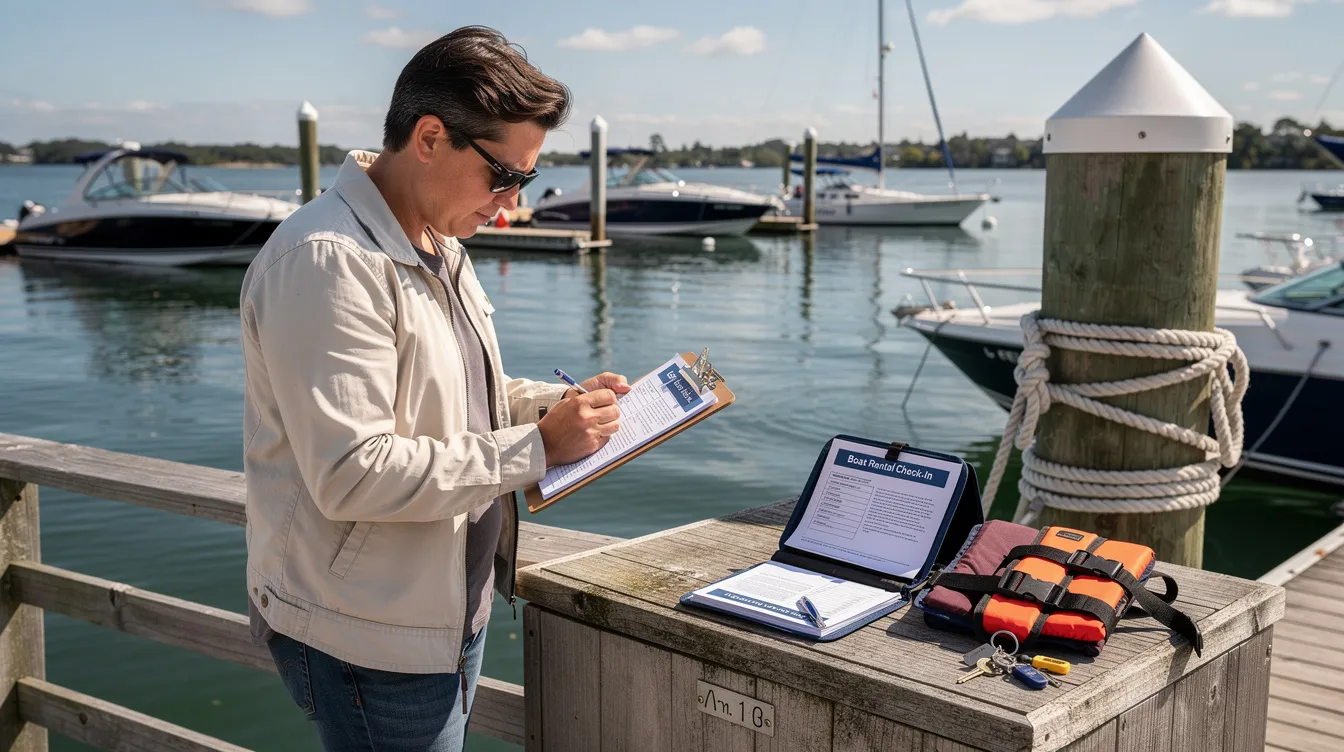
Reputable companies often provide thorough briefings on safety and navigation before departure. The check-in process includes:
- 15–30 minute safety briefing covering no-wake speeds (5–10 knots)
- Documenting existing scratches via photos or apps
- Reviewing local navigation rules
- Signing the rental agreement
Conduct a thorough inspection of the vessel to document existing damage before signing the rental agreement. Document any existing damage on the boat to avoid being held liable for it later.
Step 6: Return and Check-Out
Returns enforce specific rules:
- Refuel the boat (or pay $8–12/gallon surcharges)
- Late fees of $50–200/hour may apply
- Cleaning fees of $100–300 if the boat is messy
- Post-trip inspections via photos document condition
Understanding the rental agreement prevents unexpected bills or lost deposits.
Safety, Licensing, and Insurance
Safety and compliance are just as important as price when booking a boat rental service. With 600–700 annual U.S. boating fatalities according to USCG data, taking precautions seriously protects everyone on board.
Licensing Requirements
Many regions require NASBLA-approved boating education cards for operators born after 1983. Minimum age limits for powerboat operators typically range from 16–21 depending on the state. Reliable boat rental companies often require a boater safety certification or provide a safety course.
When to Hire a Captain
If not experienced, look for services offering captained charters or basic training. Professional captains ($100–300/hour) are advisable for:
- First-time boaters
- Night cruises
- Busy harbors like Miami
- Larger yacht charters (vessels over 26 feet)
Captains hold USCG licenses and provide invaluable local knowledge.
Safety Checks Before Departure
Ensure the boat is equipped with regulated life jackets, fire extinguishers, and first-aid kits. A good boat rental company should provide a mandatory safety briefing and ensure all necessary gear is on board.
Key safety items to verify:
- Type I–III PFDs sized for all passengers including kids
- Working navigation lights
- Fire extinguisher (annual inspection current)
- Bilge pump
- VHF radio for communication
Check that life jackets are in good condition and appropriately sized for all guests, especially children. Overloading a vessel is a major safety risk—never exceed stated capacity limits.
Insurance Basics
Verify if the rental price includes liability and damage insurance covering the renter. Most rentals include $500,000–2 million liability coverage. Optional damage waivers ($20–50/hour) can reduce deductibles from $2,500–5,000.
Common exclusions include:
- Intentional damage
- Operation while intoxicated
- Unreported gear loss
What to Bring Yourself
For a safe and comfortable experience, pack:
- SPF 50 sunscreen
- Polarized sunglasses
- Non-slip, bilge-safe shoes
- Weather-appropriate layers
- Weather apps like Windy for forecasts
Check independent reviews on sites like Google, TripAdvisor, or Yelp for maintenance and customer support insights. Reputable boat rental companies typically have a regular maintenance schedule for their vessels.
Choosing the Right Boat for Your Occasion
Different occasions require different boats, capacities, and amenities. Choosing a boat that comfortably fits your group size and activity type is essential for a great time on the water.
Match Group Size to Boat Size
|
Group Size |
Recommended Boat |
Approximate Daily Cost |
|---|---|---|
|
Family of 4 |
20-foot pontoon |
$600/day |
|
Friends (10 people) |
24-foot deck boat with tower |
$1,000/day |
|
Bachelor party (12-15) |
30-foot center console |
$1,500/day |
|
Corporate event (25-30) |
50-foot yacht (crewed) |
$5,000/day |
Self-Drive vs Captained vs Crewed
Your choice depends on skills, comfort level, and budget:
- Self-drive: Best for experienced boaters on calm inland lakes
- Captained: Recommended for coastal waters with tides, unfamiliar locations, or when you want to enjoy without worrying about navigation
- Fully crewed: Essential for events, luxury experiences, and large yacht charters
Consider Water Conditions
Location matters for safety and enjoyment:
- Calm inland lakes: Flat wakes under 3 feet, suitable for beginners
- Tidal coastal waters: Waves of 2–6 feet require experience or a captain
- Busy city rivers: Traffic and no-wake zones favor electric boats or captained trips
Special Add-Ons
Enhance your adventure with optional extras and pre-ordered drinks and party supplies:
- Water toys (tubing at $75/hour, or a thrilling 30-minute e-foil experience where available)
- Catering ($50/head)
- DJ setups or music equipment and a curated boat day music playlist to match the vibe
- Photography packages
- Decorations for birthdays or anniversaries
Book Early for Peak Times
Choosing the best boat rental service requires balancing specific needs with the provider’s reputation and safety standards. For summer 2026 peaks, book 4–8 weeks in advance for weekends and holidays. Yacht charters for special events need 2–3 months lead time.
Consider weekdays (20–40% cheaper) or shoulder seasons (May and September) for better availability and rates. Prioritize safety and reliability over the lowest price when choosing a boat rental service.
Costs, Fees, and How to Save Money
Cost drivers for boat rentals include boat size, vessel age, location, season, and whether crew and fuel are included. Understanding the full picture helps you budget accurately and find ways to save.
Rental Pricing Components
|
Component |
Typical Range |
|---|---|
|
Base rate (small electric) |
$100–200/hour weekdays |
|
Base rate (motorboat) |
$200–400/hour |
|
Base rate (yacht charter) |
$1,000–5,000/day |
|
Fuel surcharge |
20–50% of base for gas boats |
|
Cleaning fee |
$100–250 |
|
Captain fee |
$100–300/hour |
|
Taxes |
10–15% |
|
Clarify if the quoted rental rate includes fuel, cleaning fees, and taxes before you pay. U.S. averages suggest $300–800/day as standard for mid-range boats. |
|
Common Extra Charges
Watch for these potential additions:
- Late return fees: $50–200/hour
- Mileage overages: $1–2/mile beyond limits
- Damage charges: $200+ depending on severity
- Additional docking or mooring fees
- Gratuity for captains and crew (15–20% customary)
Money-Saving Tips
- Rent on weekdays: Enjoy 30–40% lower rates than Saturday bookings
- Choose shoulder seasons: May and September offer better availability and prices
- Split costs: Fill the boat to capacity—$50–100 per person for group outings
- Book multi-day packages: Often 10% cheaper than equivalent single-day rates
- Join a boat club: Frequent boaters can see 50% effective rate reductions
- Look for bundles: Some services offer passes or repeat-renter discounts for 2026
Many boat rental companies report frequent last-minute cancellations due to issues with boats or staffing, impacting customer satisfaction. Booking early and confirming details reduces your risk of disappointment.
FAQ
The following questions address practical planning details that renters frequently ask but aren’t fully covered in the main sections above.
How far in advance should I book a boat rental for summer 2026?
For peak summer weekends and holidays like July 4th, book 4–8 weeks ahead to secure your preferred vessel and time slot. Large yacht charters and special events require 2–3 months of advance planning due to high demand and limited availability. Weekday and shoulder-season dates (May and September) usually allow shorter notice—sometimes just a few days. If policies permit, you can often secure the date early and adjust start time or boat size later.
What happens if the weather is bad on the day of my rental?
Most reputable rental services monitor weather forecasts closely and will not send boats out in unsafe conditions like strong storms or winds exceeding 15–20 knots. Typical options include rescheduling to another date within the same season, switching to a different time of day, or receiving credit toward a future rental. Full refunds are usually only given when the operator cancels for safety reasons—not for light rain or overcast skies. Review the specific weather and cancellation policy before paying your deposit to avoid surprises.
Can I bring children on a rented boat, and are there special rules?
Children are welcome on most pontoons, deck boats, and family-friendly cruisers as long as total capacity limits are respected. Many regions require properly sized life jackets for every child, often with stricter rules for ages 12 and under. Ask the rental company in advance about child life jacket availability—and consider bringing your own if you prefer a perfect fit. Calmer waters, shorter trips, shaded seating, and earlier departure times work best when planning outings with younger kids.
Do I need boating experience to rent a boat?
For small boats and pontoons under 25 horsepower, many services allow first-time boaters after a short 15–20 minute safety and operations briefing. Larger vessels and yacht charters often require hiring a professional captain, especially in unfamiliar or busy waters. Some locations—including California and Florida—require a formal boating license or safety certificate regardless of experience level. Complete beginners should consider starting with a captained trip or a basic on-water lesson before operating a boat independently.
Are pets allowed on boat rentals?
Pet policies vary widely by operator and boat type. About 60% of operators allow dogs on pontoons or deck boats, though some charge extra cleaning fees of $50–150 or require additional damage deposits. Always confirm pet rules before booking, and bring a pet life jacket, water bowl, and shade for your dog. Limit trip length if your pet isn’t used to being on the water. Luxury yacht charters and vessels with high-end interiors typically have stricter no-pet policies to protect upholstery and finishes.